Profile Wardrobe vs Traditional Wardrobe: Key Differences
Modern wardrobes are available in many styles, materials and construction systems. Two commonly considered options are profile wardrobes and traditional wardrobes. While both can provide excellent storage, they differ in construction, appearance, finishing possibilities and overall design language.
Understanding these differences can make it easier to select a wardrobe that matches your bedroom and personal requirements.
Profile Wardrobe: A Modern Design Approach
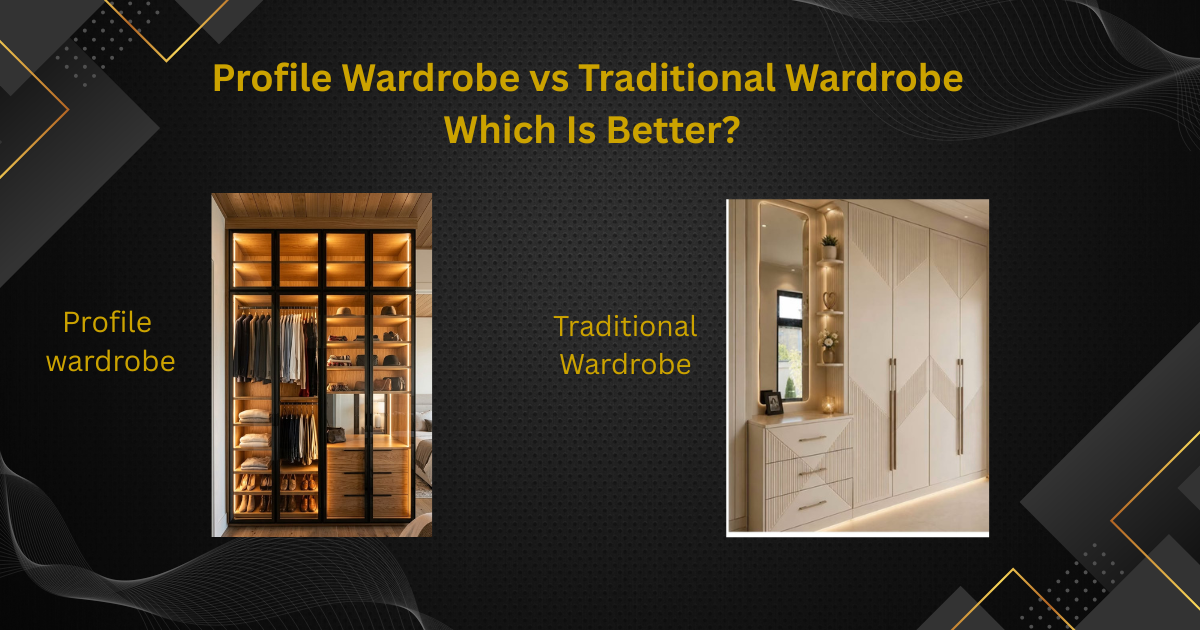
A profile wardrobe uses aluminium or other frame profiles as part of the shutter structure. The profile creates a defined frame around materials such as glass, mirror, laminate or decorative panels.
This type of wardrobe is often associated with contemporary interiors because of its slim lines and structured appearance. Profile systems can also be used to create different combinations of materials, making them suitable for premium bedroom and walk-in wardrobe designs.
Common Profile Wardrobe Combinations
- Aluminium profile with tinted glass
- Profile with clear or frosted glass
- Mirror and profile shutters
- Wood-finish panels with profiles
- Laminate panels with modern profiles
The final appearance depends on the profile design, colour, shutter material and overall bedroom interior.
Traditional Wardrobe: A Flexible Classic
Traditional wardrobes generally use board-based shutters attached with hinges and fitted with handles. They remain a popular option because they can be designed in many sizes, colours and finishes.
Traditional wardrobes can be made using materials such as plywood, MDF or suitable boards and can be finished with laminate, acrylic, veneer, paint or other decorative surfaces.
Their internal layout can also be customised with shelves, drawers, hanging sections and storage accessories.
How Do Their Designs Differ?
The most noticeable difference is the visual appearance. Profile wardrobes usually have a more structured and contemporary appearance because of their visible frame system.
Traditional wardrobes can have a simpler or more conventional appearance, although modern finishes and handle designs can also make them look highly contemporary.
The choice often comes down to the overall style of the bedroom rather than storage capacity alone.
Which Offers More Design Flexibility?
Both systems offer considerable customisation, but in different ways.
Profile wardrobes provide design flexibility through combinations of frame profiles and shutter materials. Glass, mirror and decorative panels can be used to create different visual effects.
Traditional wardrobes offer flexibility through shutter finishes, colours, handles, panel designs and internal storage configurations.
What About Space and Accessibility?
Both wardrobe types can be designed according to the available room dimensions. Profile systems are particularly popular for sliding wardrobes, which can be useful where front clearance is limited.
Traditional wardrobes are commonly available with hinged shutters. These require enough space in front of the wardrobe for the doors to open comfortably but can provide direct access to the interior when opened.
Which One Requires More Maintenance?
Maintenance depends on the materials, hardware and installation quality rather than simply the wardrobe category.
Glass and mirror surfaces may require regular cleaning to maintain their appearance, while laminate surfaces can generally be cleaned easily with suitable methods. Hardware should also be maintained according to the manufacturer’s recommendations.
Does a Profile Wardrobe Cost More?
There is no fixed price difference because the total cost depends on the complete specification.
Important factors include:
- Wardrobe dimensions
- Profile system
- Board or panel material
- Glass or mirror
- Hardware
- Internal accessories
- Lighting
- Finish
- Installation
A simple profile design can have a different cost from a premium profile system with specialised glass, accessories and lighting.
Choosing the Right Wardrobe for Your Interior
Consider the following before making a decision:
Bedroom style: Match the wardrobe with your furniture, walls and flooring.
Available space: Check wall dimensions and the clearance required for opening doors.
Storage needs: Plan shelves, drawers, hanging areas and accessories.
Material: Select materials according to appearance, durability and room conditions.
Budget: Compare complete specifications rather than comparing wardrobe types by name alone.
Personal preference: Decide whether you prefer a framed contemporary appearance or a more conventional shutter design.
Both profile and traditional wardrobes can be designed to provide attractive, organised and practical storage. The most suitable choice depends on the room layout, desired appearance, storage requirements, materials and overall project budget.